fourMs
Music, Mind, Motion, Machines
A lab for artistic and scientific research on music, mind, motion and machines
University of Oslo · part of RITMO
fourms.uio.no


A concert in the lab
Musicians and audience, measured together
Why?
Why a lab for music and motion?
Music is not only sound. It is also motion.
Four Ms
Music
Performance, listening and dance
Mind
Perception, cognition and experience
Motion
From the largest gestures to the smallest micromotion
Machines
Sensors, software and interactive systems
Music is motion
Two dancers, captured as they move
A lab for artistic and scientific research on music, mind, motion and machines
Measure
Motion, physiology, eyes and sound, in sync
Perform
A black box for concerts, dance and artistic research
Immerse
Spatial audio, VR and multimedia
Build
Sensors, software and interactive systems
What?
What is in the lab?
Rooms built for recording
The black box
A flexible main lab, seating an audience of about
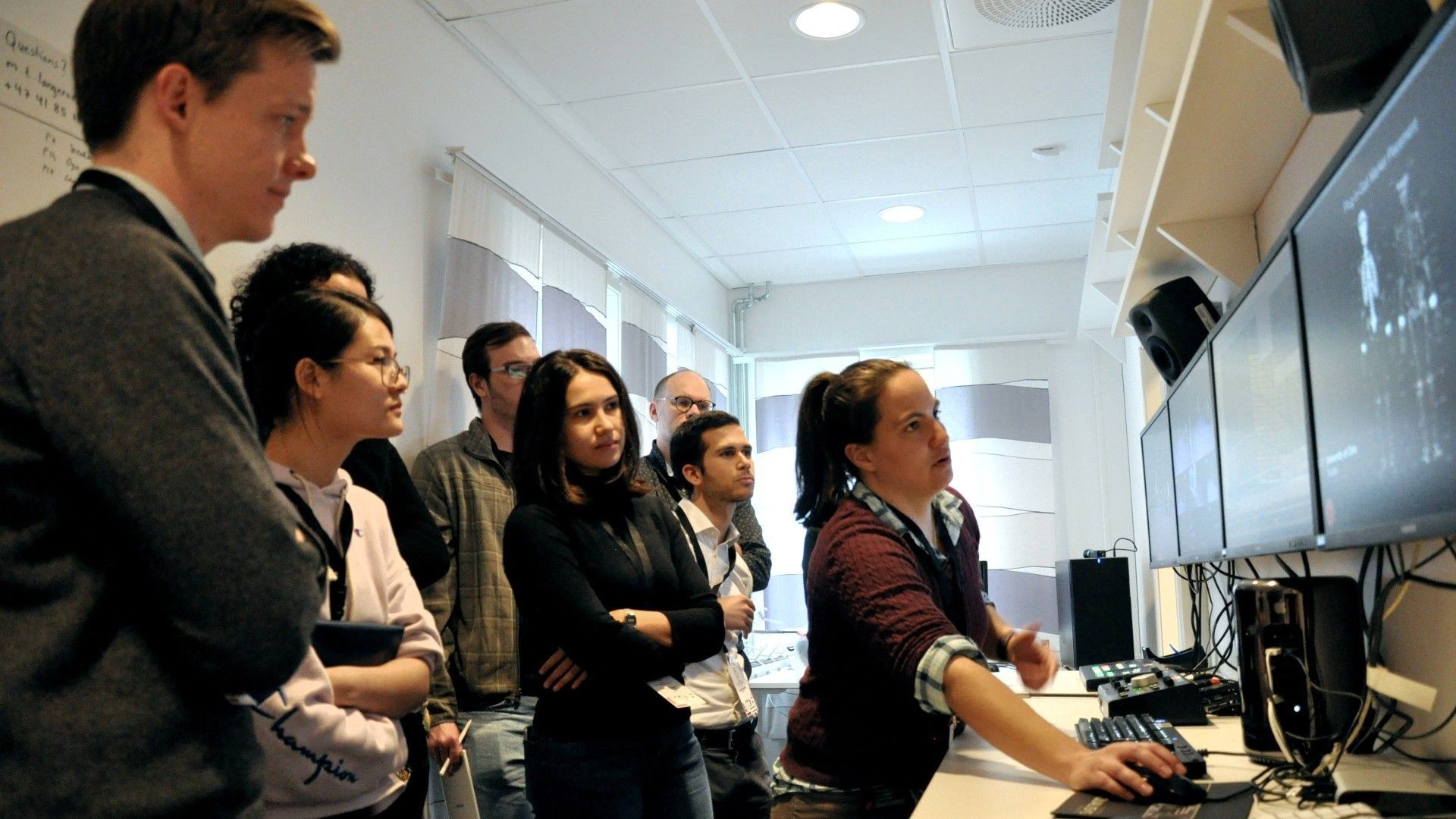
The control room
Recording and processing, patched to the lab
Quiet by design
A sound-proof entrance and quiet ventilation
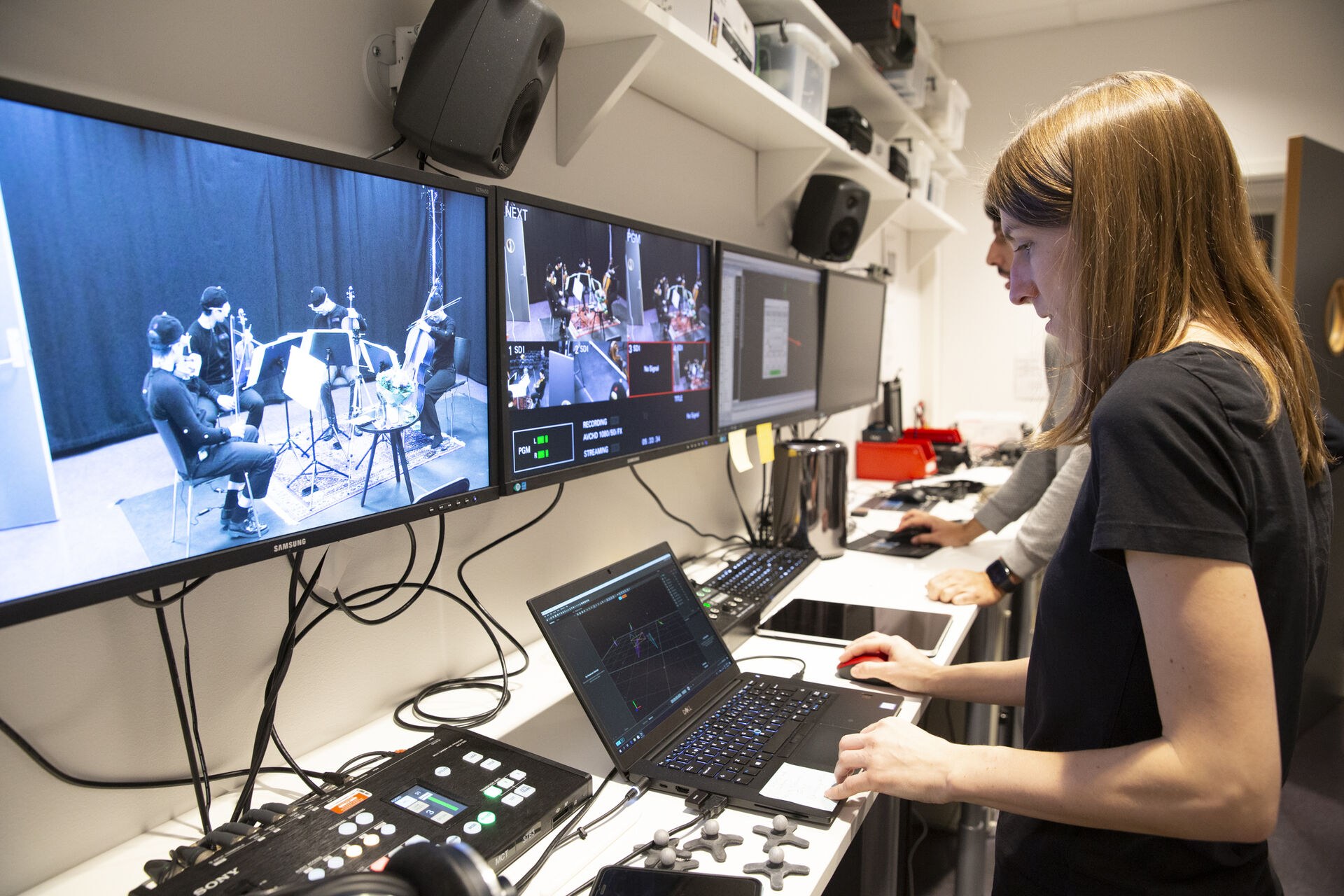
Synchronised
Motion capture, eye tracking, sound and video in one recording
A flexible black box
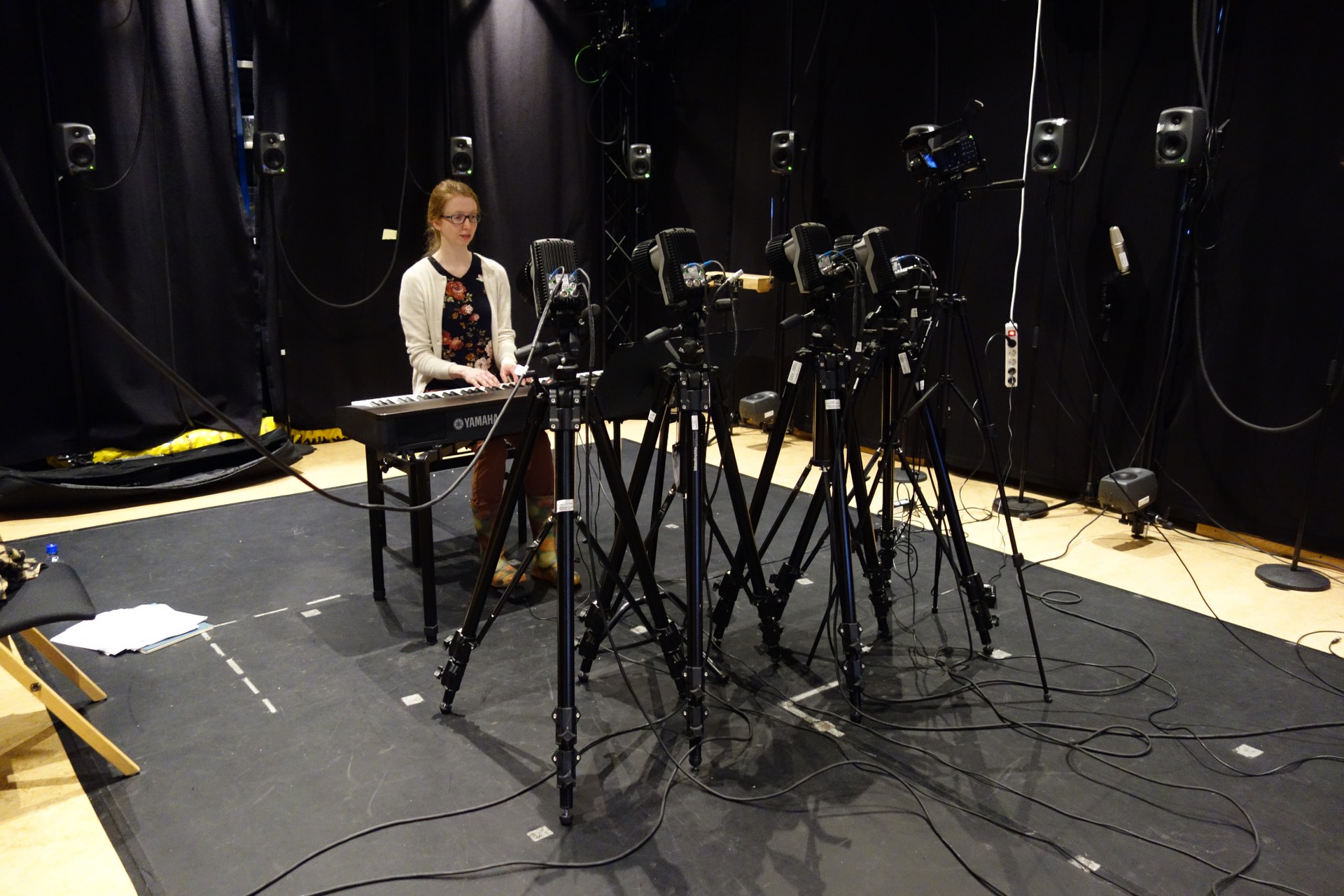
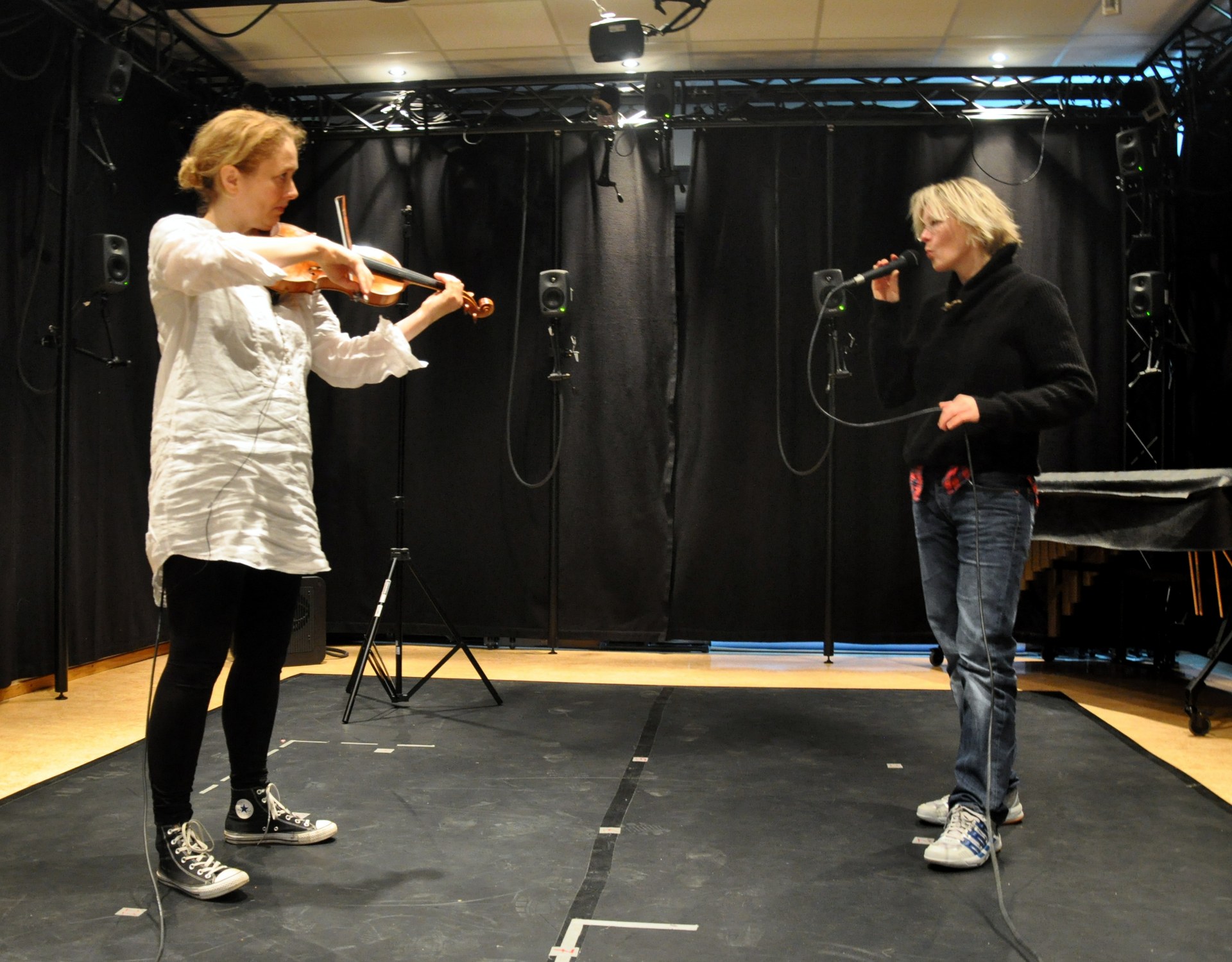
Equipment
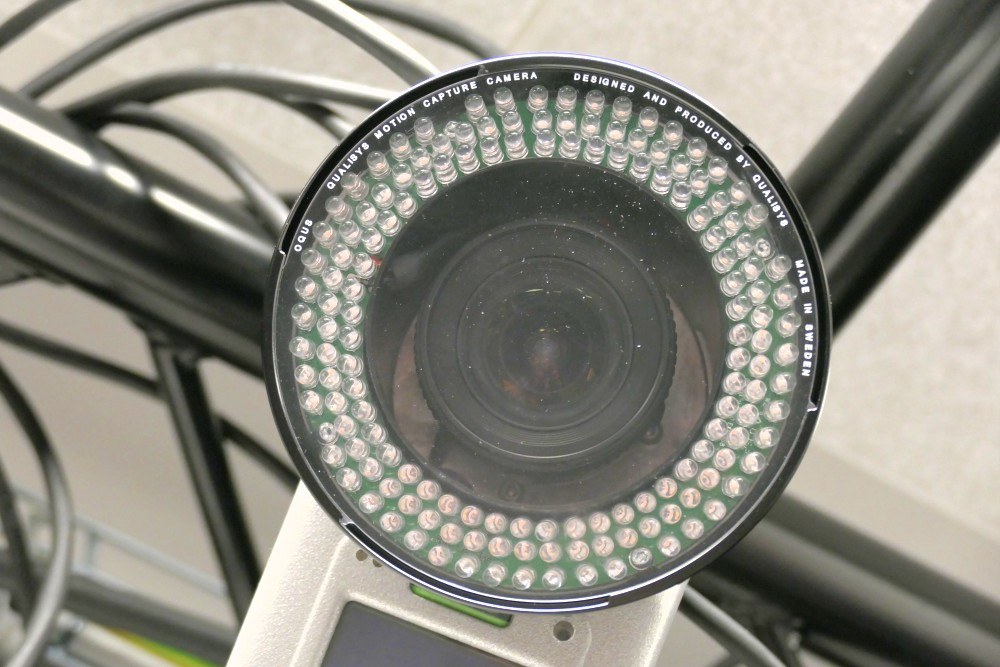
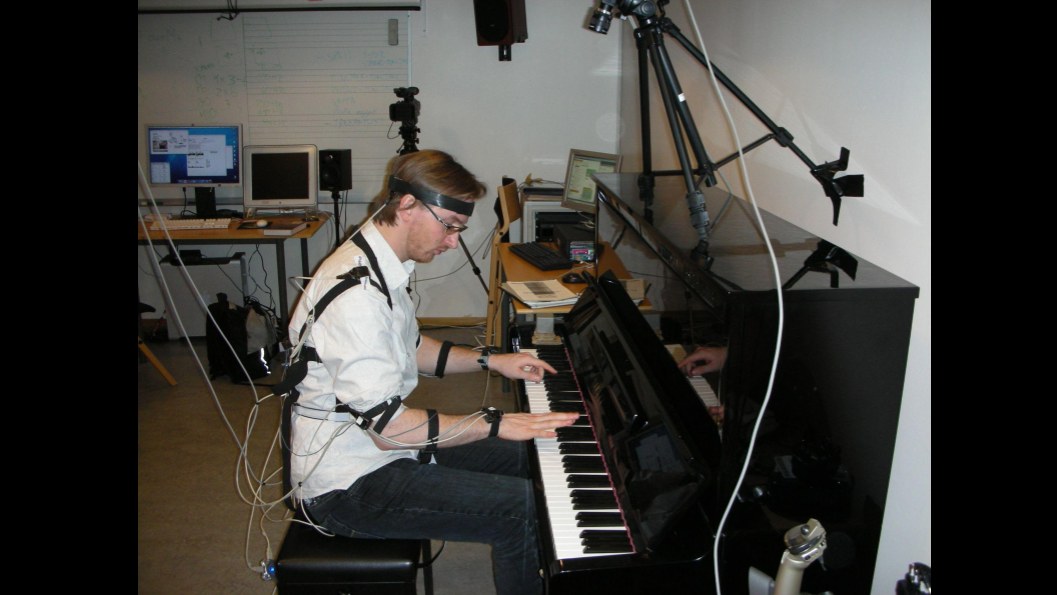
Motion
Optical and inertial motion capture, up to Hz
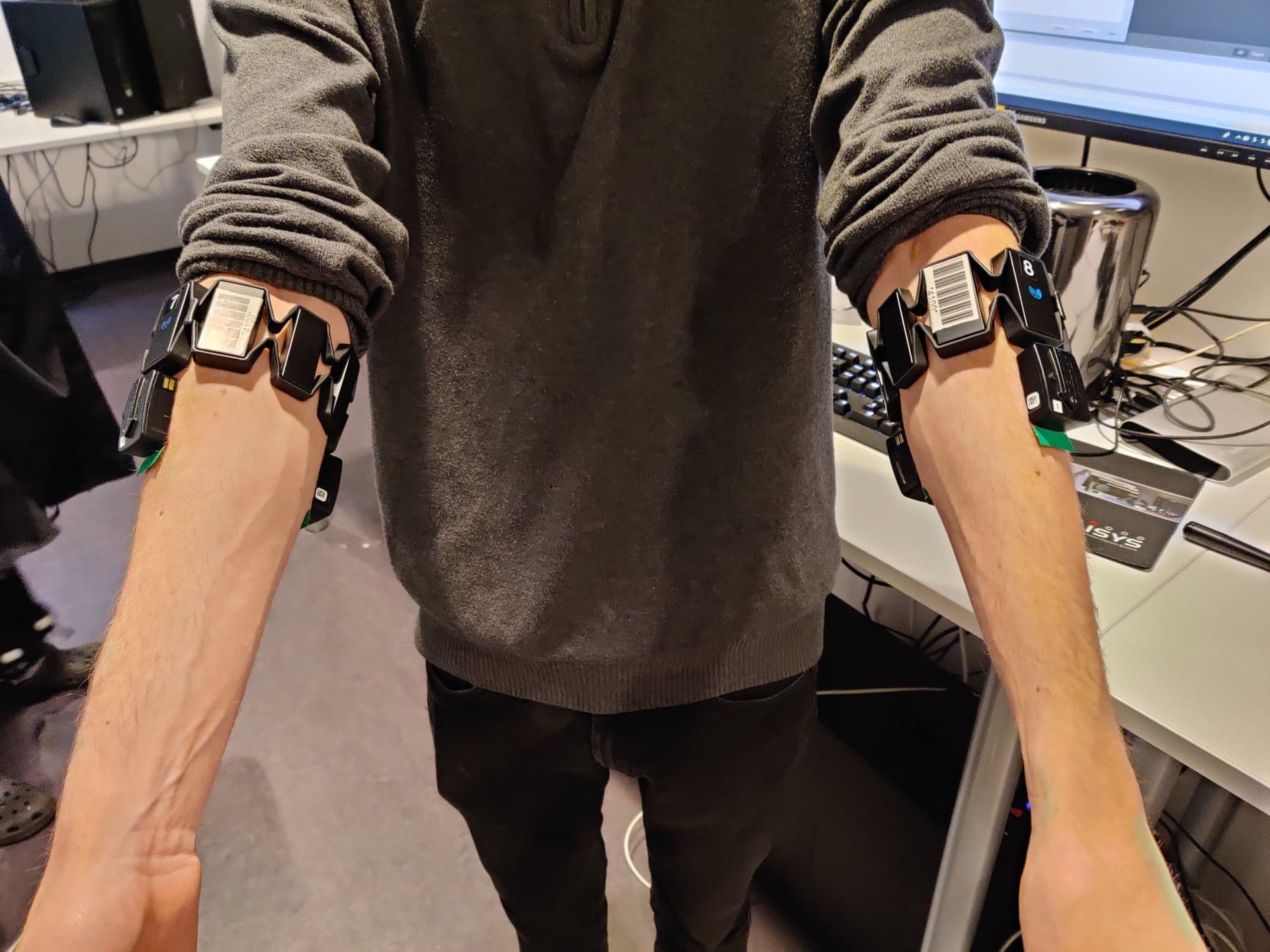
Physiology
Muscle activity, heart and breathing
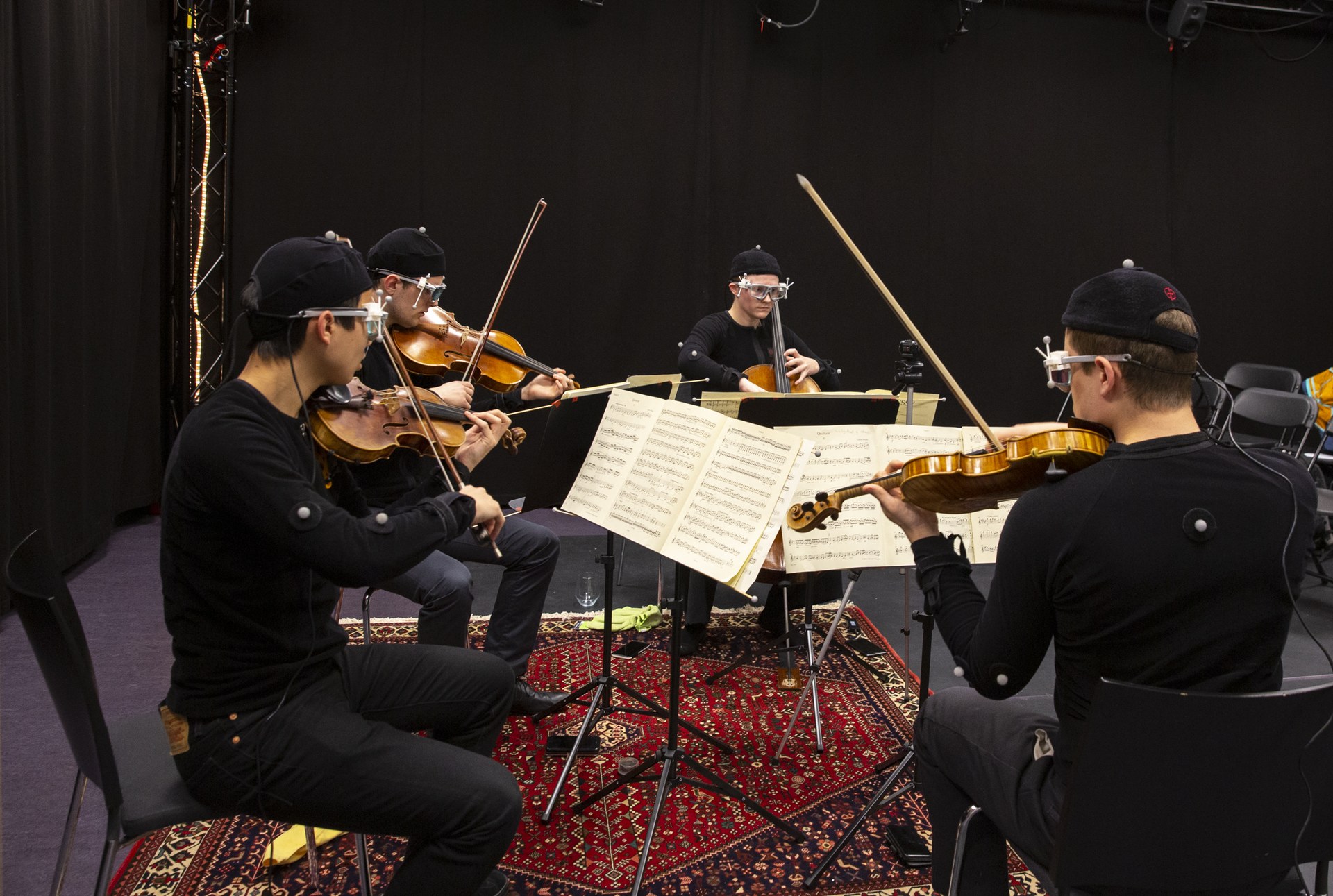
Eyes
Eye tracking and pupillometry
Sound and video
audio channels, loudspeakers
In the lab
Portable
The details
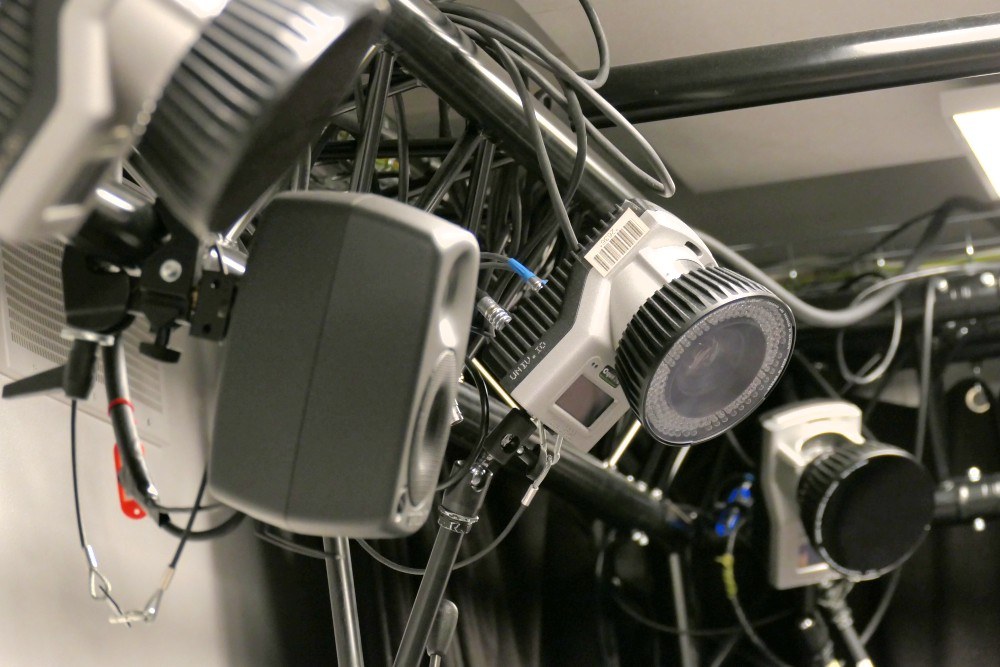
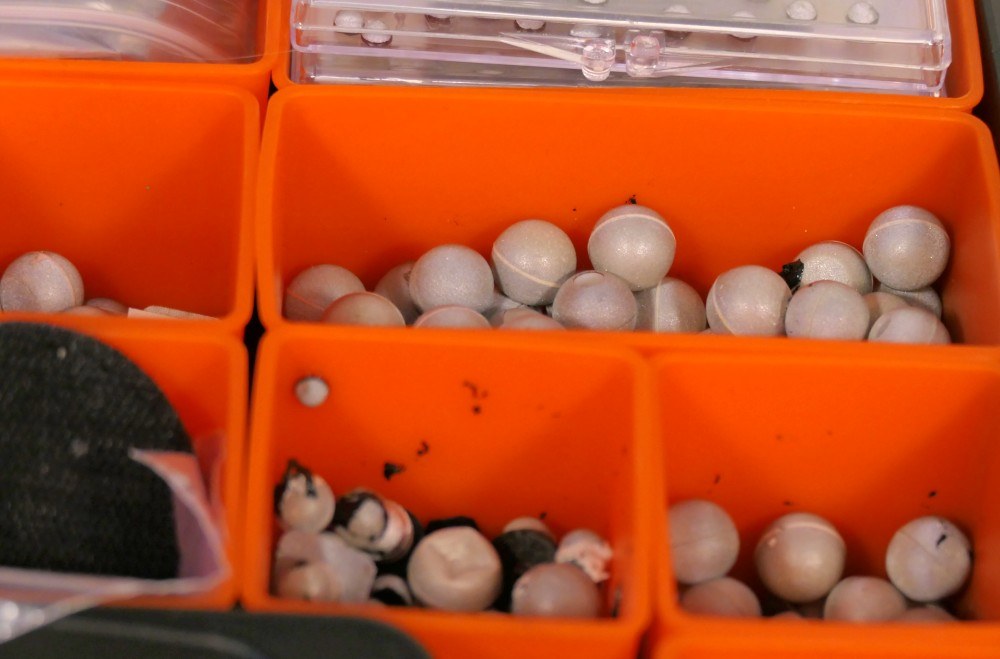
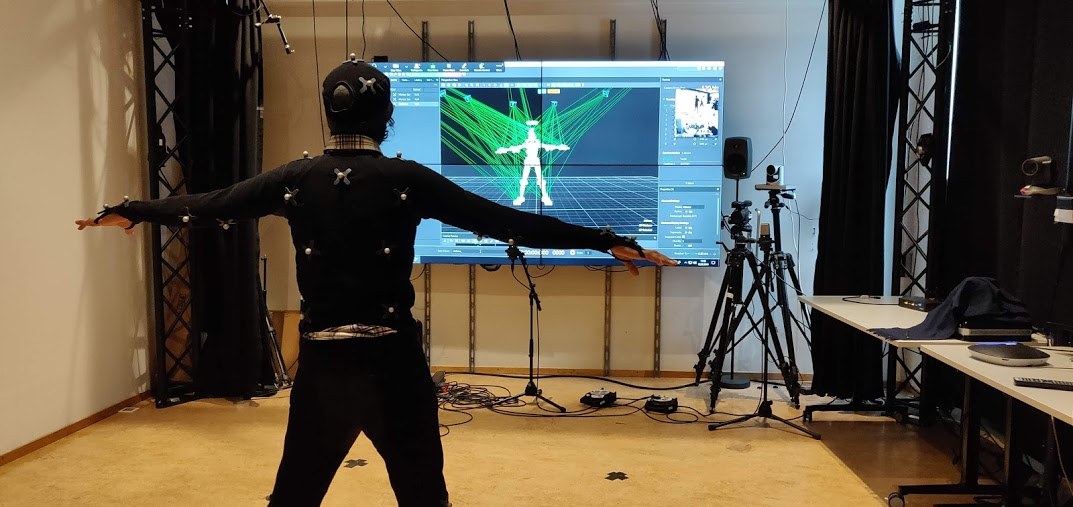
Out of the lab
Portable
Wireless sensors for whole groups: Equivital and Movesense
Secure
Secure storage and remote desktops for analysis
Mobile
Cameras, eye trackers and recorders for the field
Stavanger, 2023
A symphony orchestra and its audiences, measured in the concert hall
How?
How do we work?
From idea to open data
Plan
Design the study with the lab engineer
Record
Everything in sync, in the lab or in the field
Analyse
With open software, much of it made here
Share
Open formats, open data where possible
Before the recording
Every session starts with preparation
Software, open source
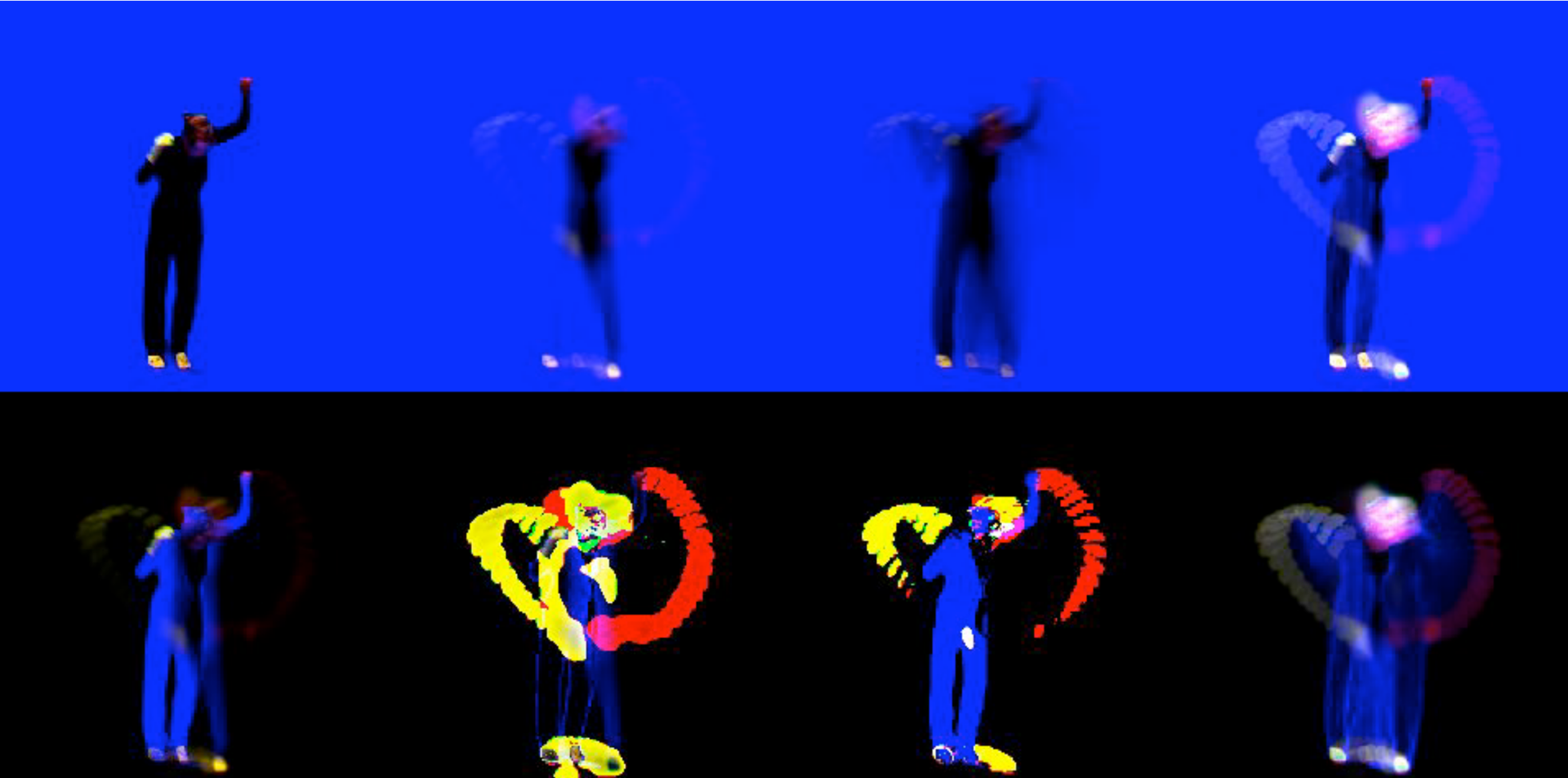
- Musical Gestures Toolbox
- VideoAnalysis
- AudioVideoAnalysis
- Mocapgrams
- MoCap Synthesiser
- IIR MoCap Filters
- Kinectofon
- ImageSonifyer
- MusicLab App
The lab handbook
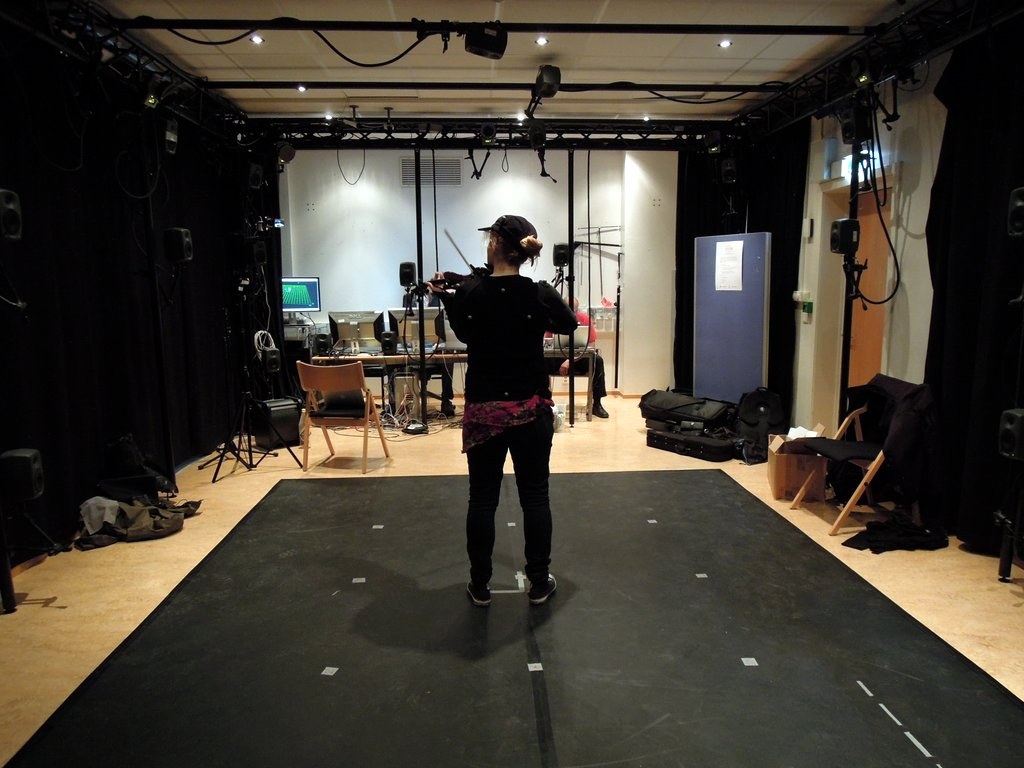
Infrastructure
Rooms and equipment

e-Infrastructure
Storage and processing

Database
Finding and reusing data
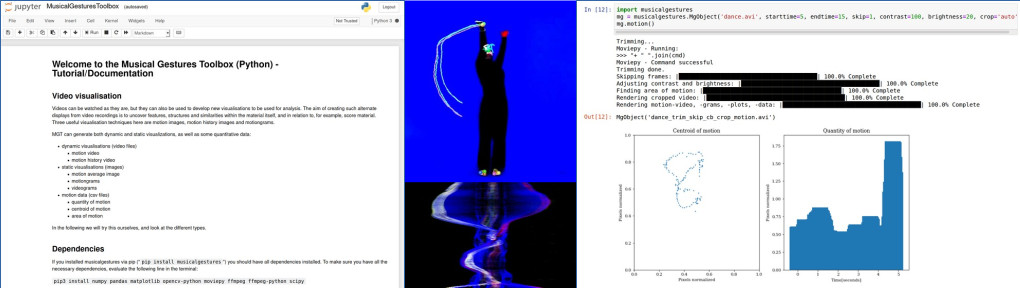
Software
Tools and documentation
Open research
An open handbook
How the lab works, online for everyone
Open formats
Good enough practice, from recording to archive
Open data
Shared where privacy and copyright allow
Who?
Who uses the lab?
Users from many disciplines
From universities, the cultural sector and industry
Users in a year, as of 2020
Research themes
Moving to music
Air instruments, sound-tracing, dance, entrainment and pulse
Performers
Posture, fluency and coordination in ensembles
Standing still
Micromotion, the smallest motion we can produce
Dance
Motion, meaning and narrative
Robots
Robots and people that predict each other
Brains and eyes
EEG and eye tracking with motion
Sports
An athlete on a rowing machine, with sensors and eye tracking
Machines
Self-playing guitars
An open lab
Musicologists, psychologists, informaticians and many more
Partners
Sister labs
Ghent, Hamburg, Genova and Jyväskylä
NordicSMC
Sound and music computing in the Nordic countries
RITPART
McGill, UC Berkeley and Toyohashi
MusicLab
Open research in real venues · musiclab.uio.no
Not a lab, but a project
A partnership
An open research innovation project between RITMO and the University Library
Mobile equipment
Sensors, cameras and recorders from the fourMs Lab
Real venues
Concert halls, clubs, libraries and festivals
A concert, data collection and a conversation with the audience, in one event
Always free and open to everyone, and always streamed
One event, five parts
MusicLab in practice
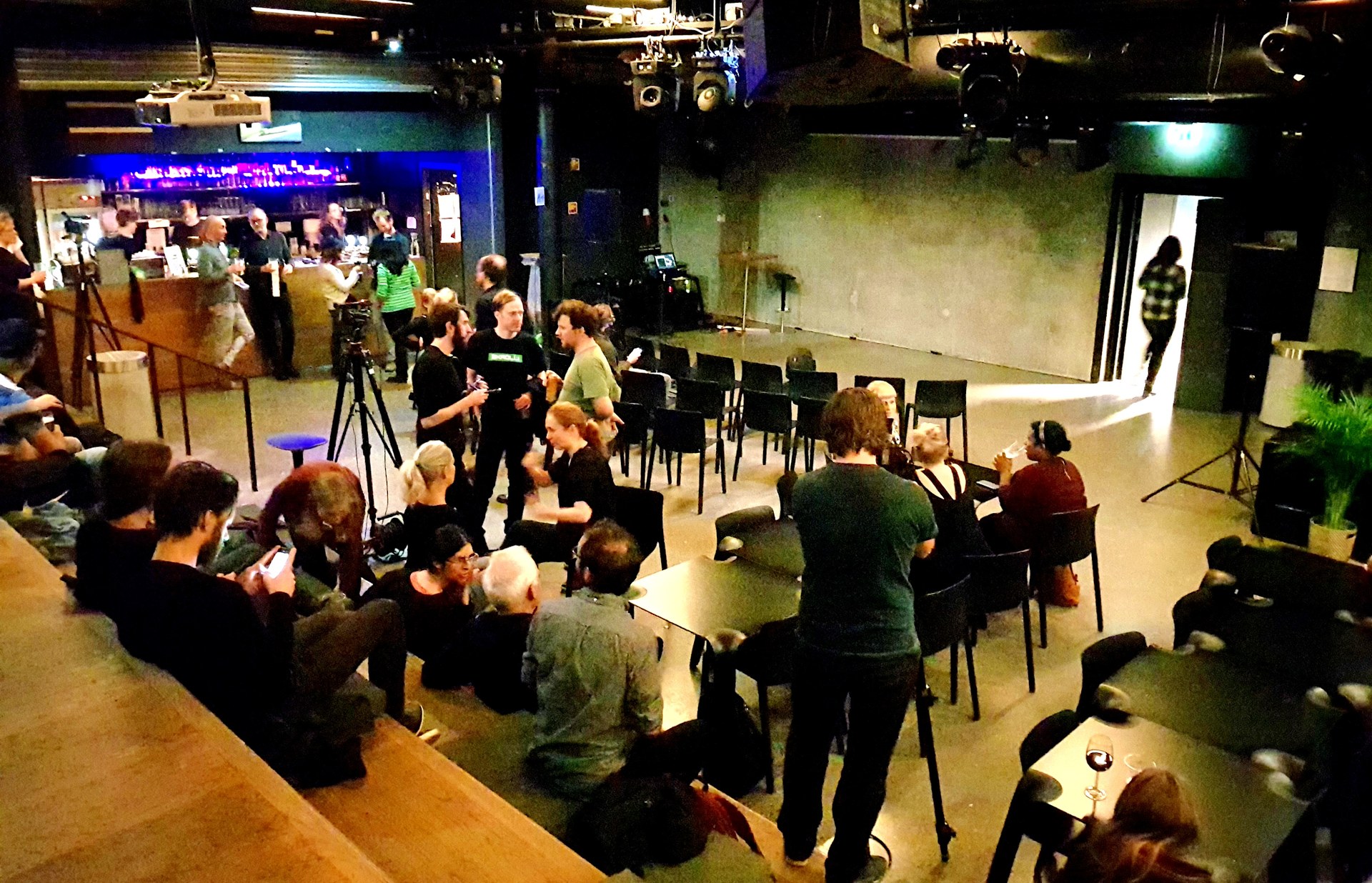
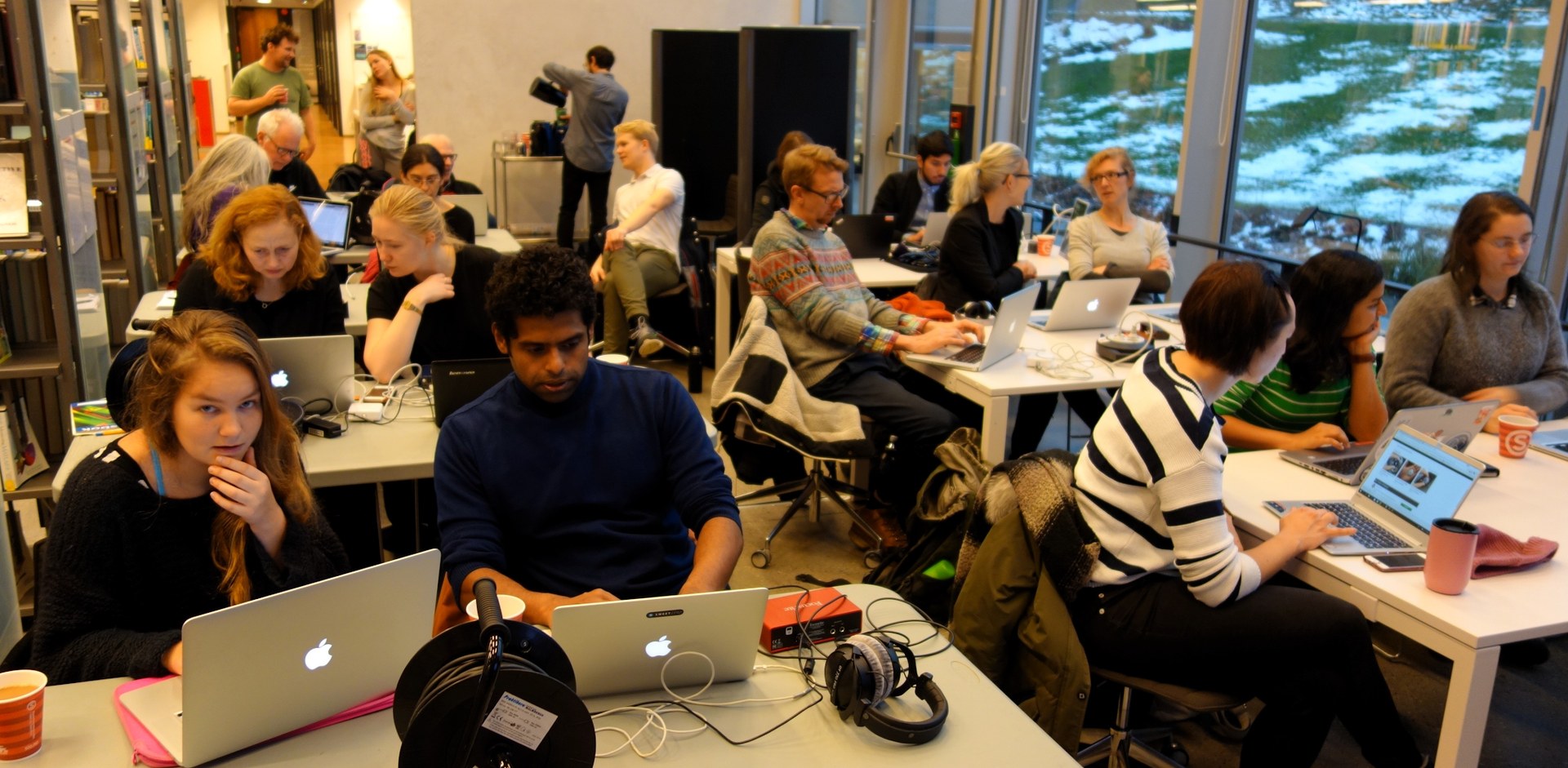
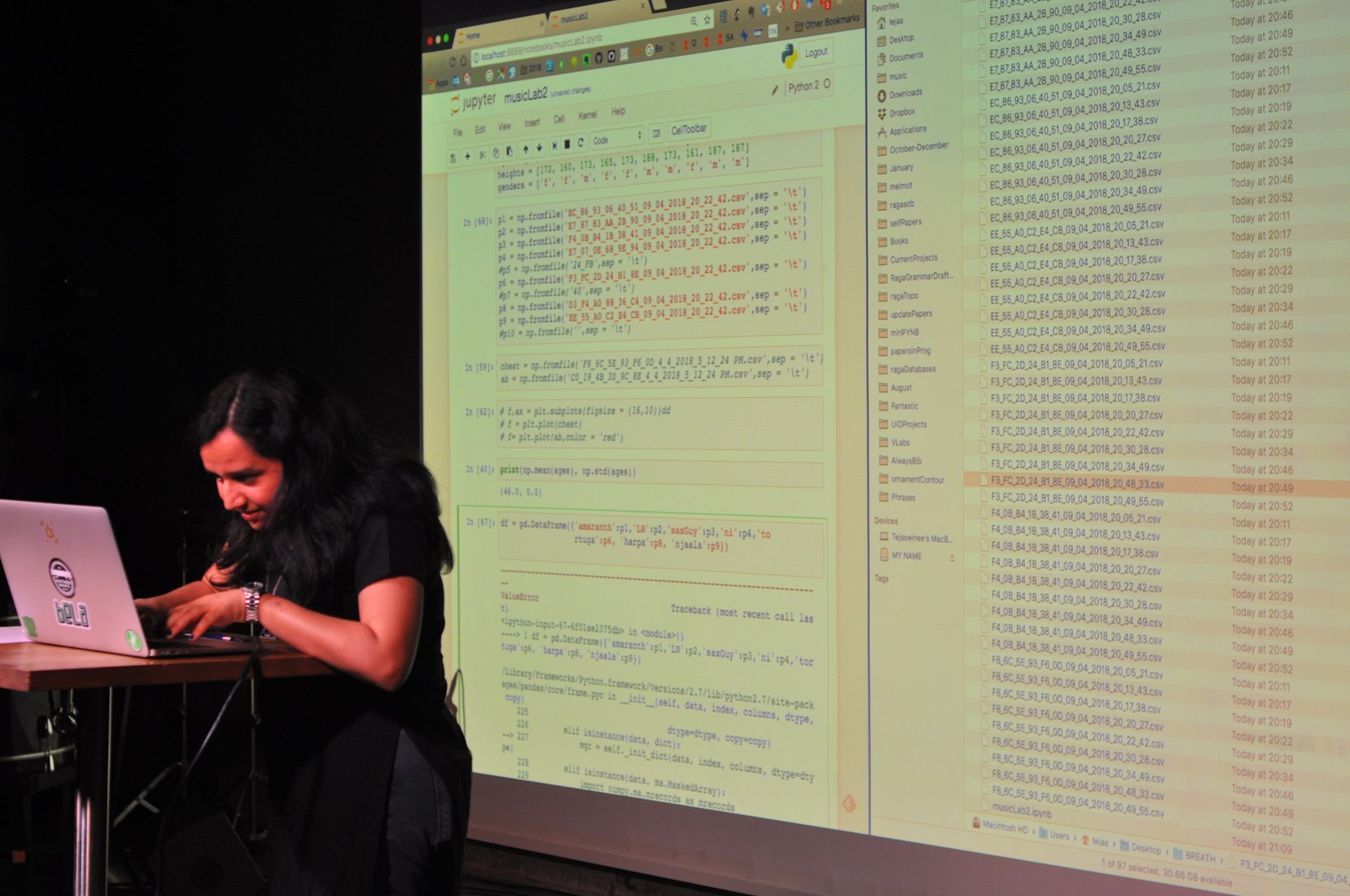
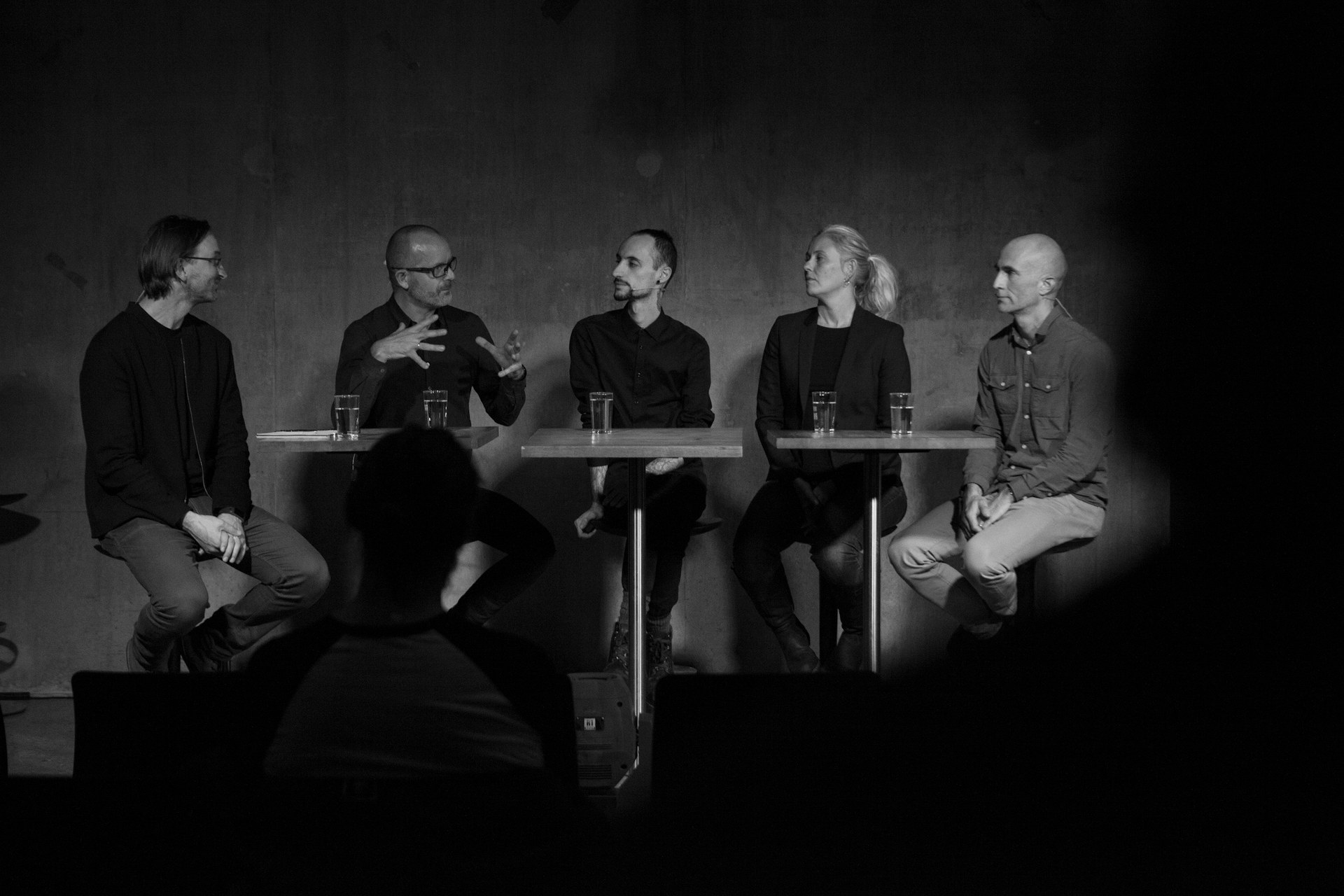
MusicLab events since 2017
MusicLab Copenhagen, 2021
The Danish String Quartet, with markers and sensors
Abels KORK, 2024
With the Norwegian Radio Orchestra
Behind the scenes
Recording the orchestra
Standstill
The Norwegian Championship of Standstill
How still can you stand?
The championship
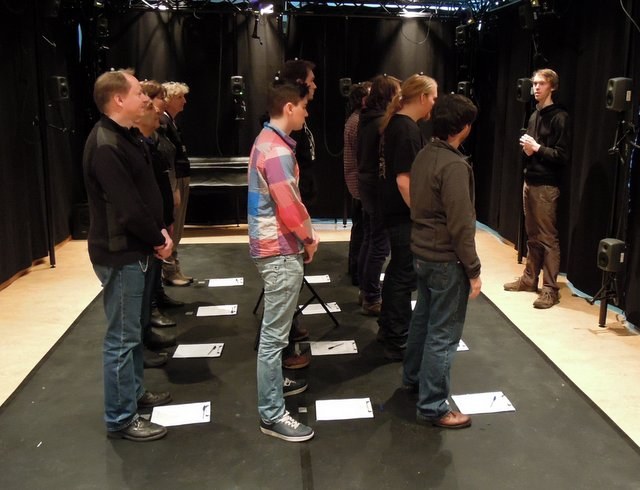
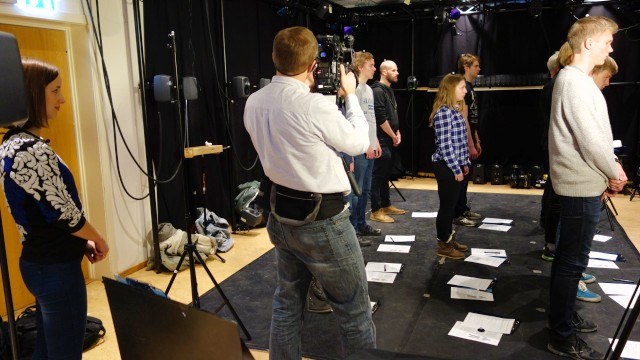
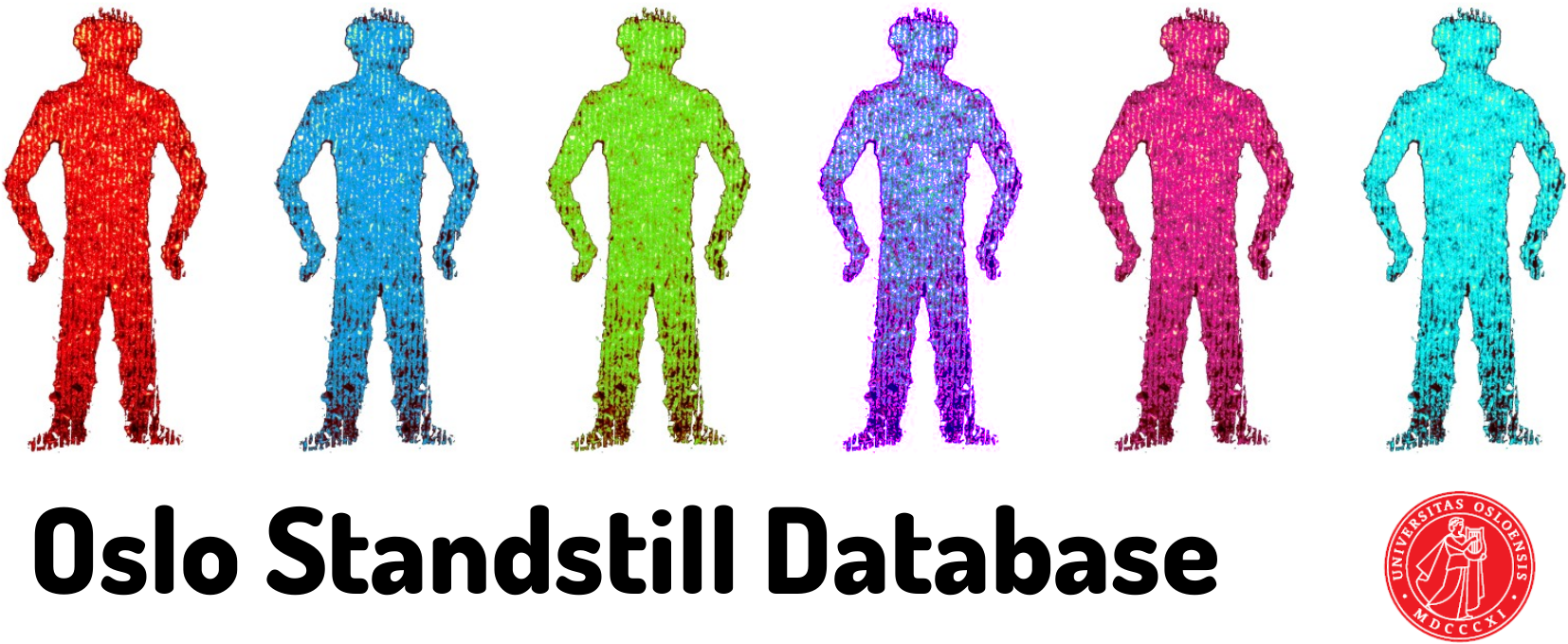
recordings of people standing still, in collections from to , in the open Oslo Standstill Database
Sverm, 2012
Standstill as performance
Learn?
Where can you learn the methods?
Teaching
Online
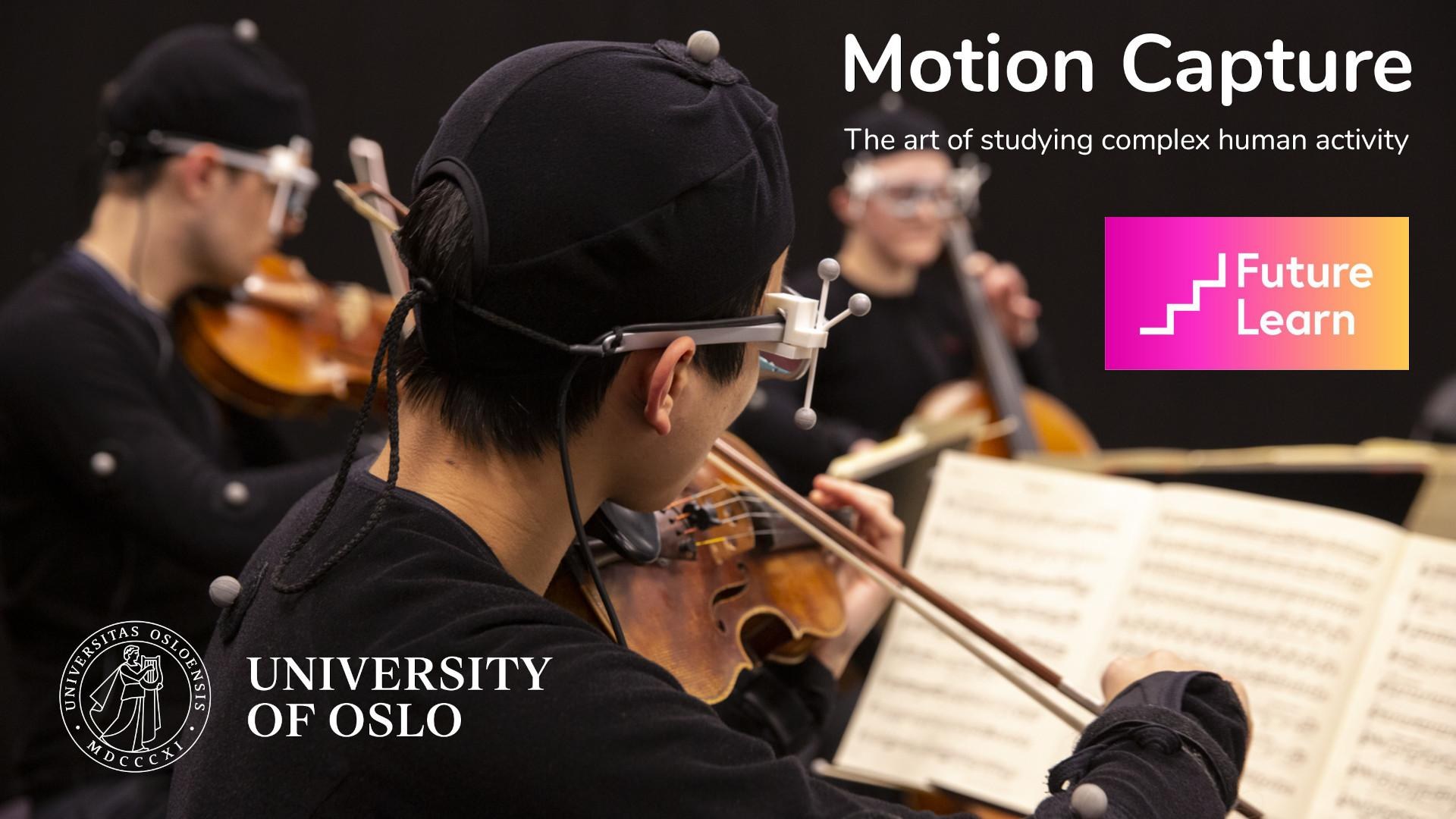
Free courses: Music Moves, Motion Capture and Pupillometry
On campus
Motion capture at bachelor, master and PhD level
Workshops
Winter schools, micro courses and international workshops
When?
From Musical Gestures in 2004 to HumanLab in 2027
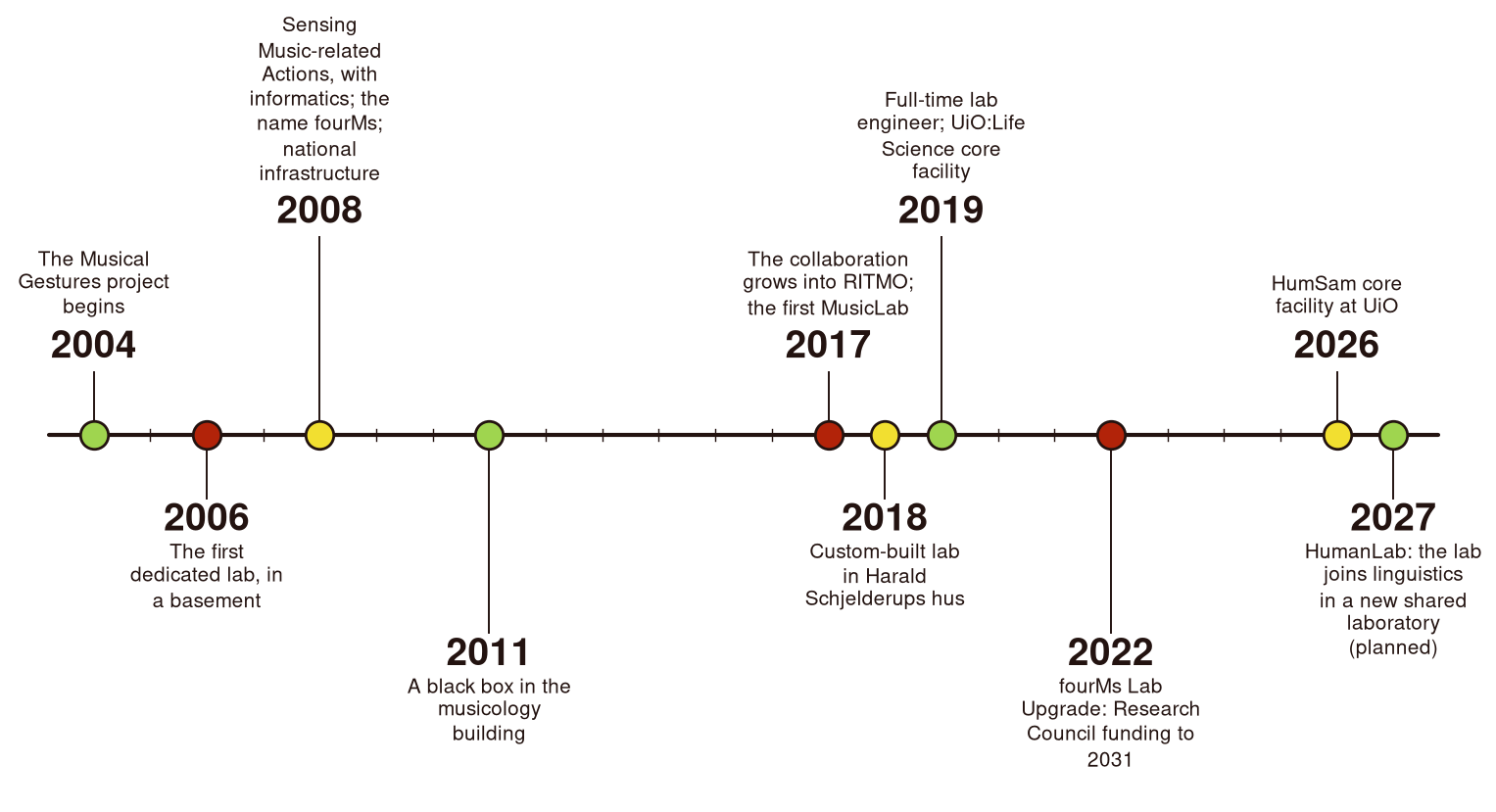
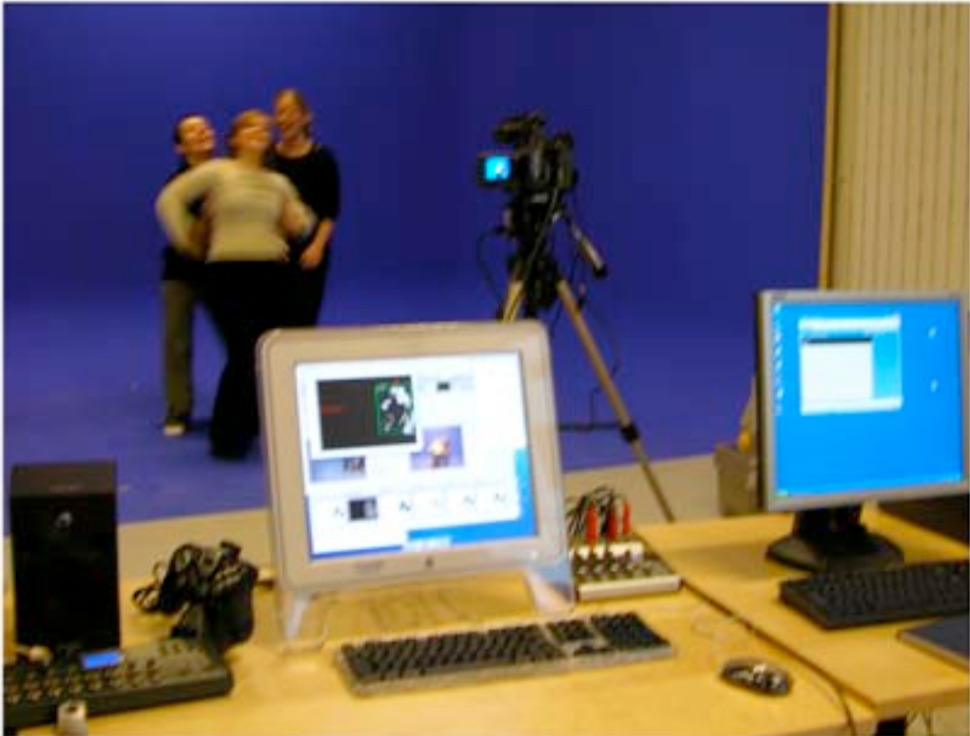
Three labs ago
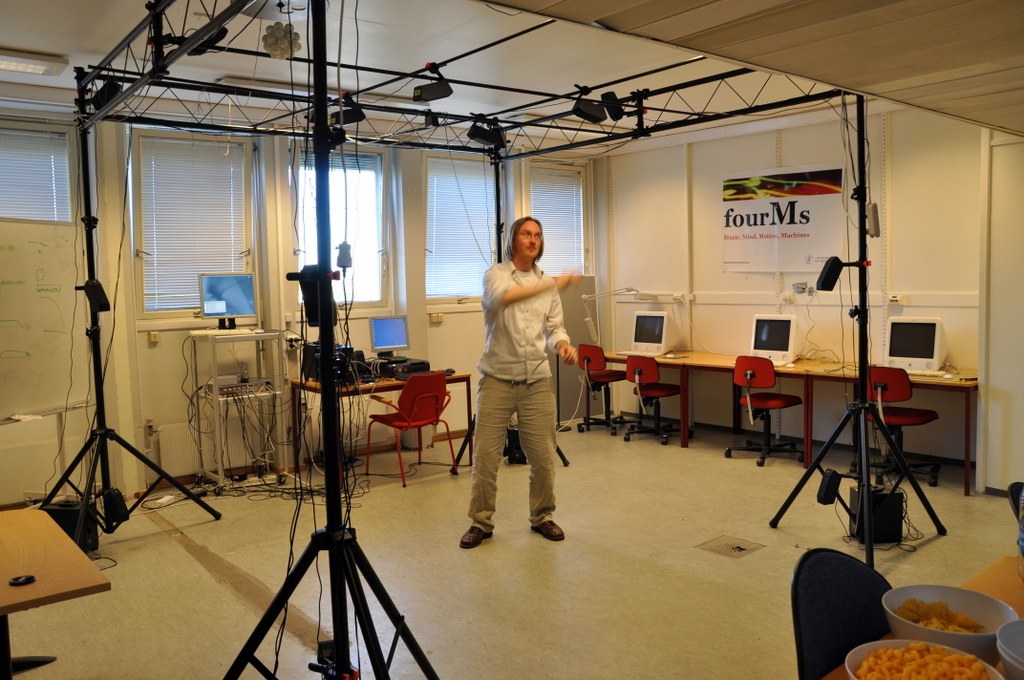
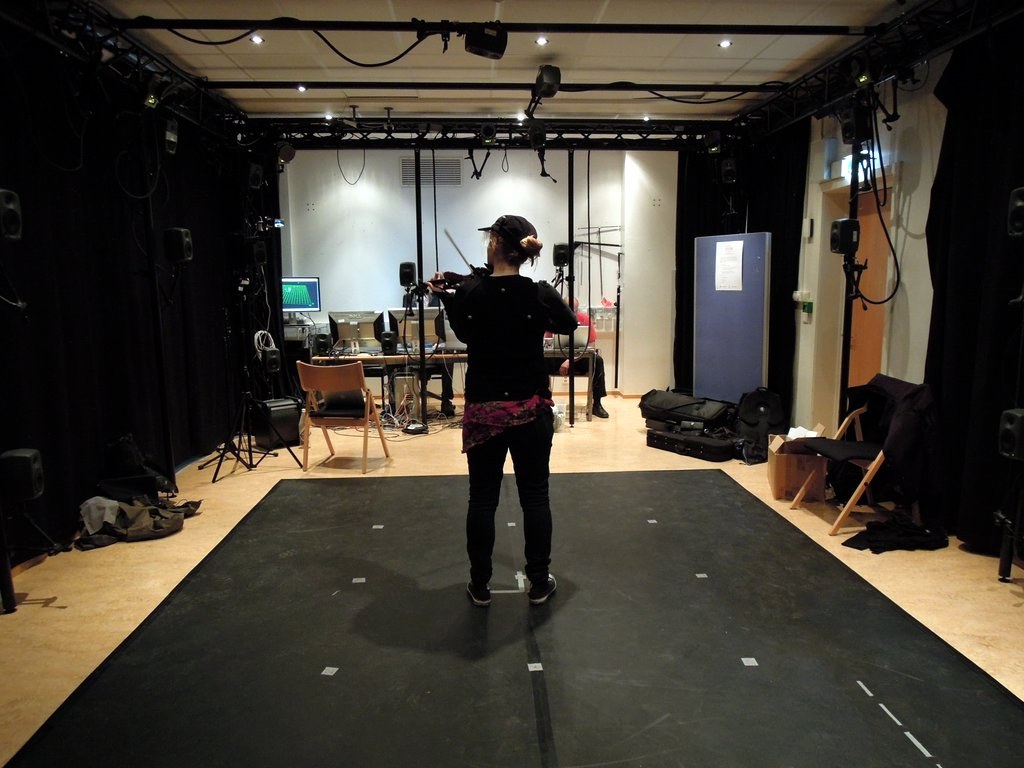
HumanLab, summer 2027
A new laboratory at the University of Oslo, run by musicology and linguistics together
Connected
RITMO
Centre of Excellence for rhythm, time and motion, 2017–2027, grown out of the fourMs collaboration.
HumanLab
From 2027, the lab's new home, with linguistics. fourMs continues there as a national infrastructure.
MishMash
Centre for AI and Creativity, 2025–2030, hosted by the University of Oslo.
fourMs
Music, Mind, Motion, Machines
fourms.uio.no
musiclab.uio.no
How this deck was made
The content comes from the lab's public web pages, RITMO's annual reports and final report, and an earlier description of the lab. The numbers come from a table of sourced facts, through a script.
An AI agent drafted the slides, figures and notes; the presenter selected and corrected them.
Responsibility for what is on the screen is the presenter's.
Built with reveal.js